doodleconstructor

00WHAT THE RESEARCH FOUND

Built to
mend itself.

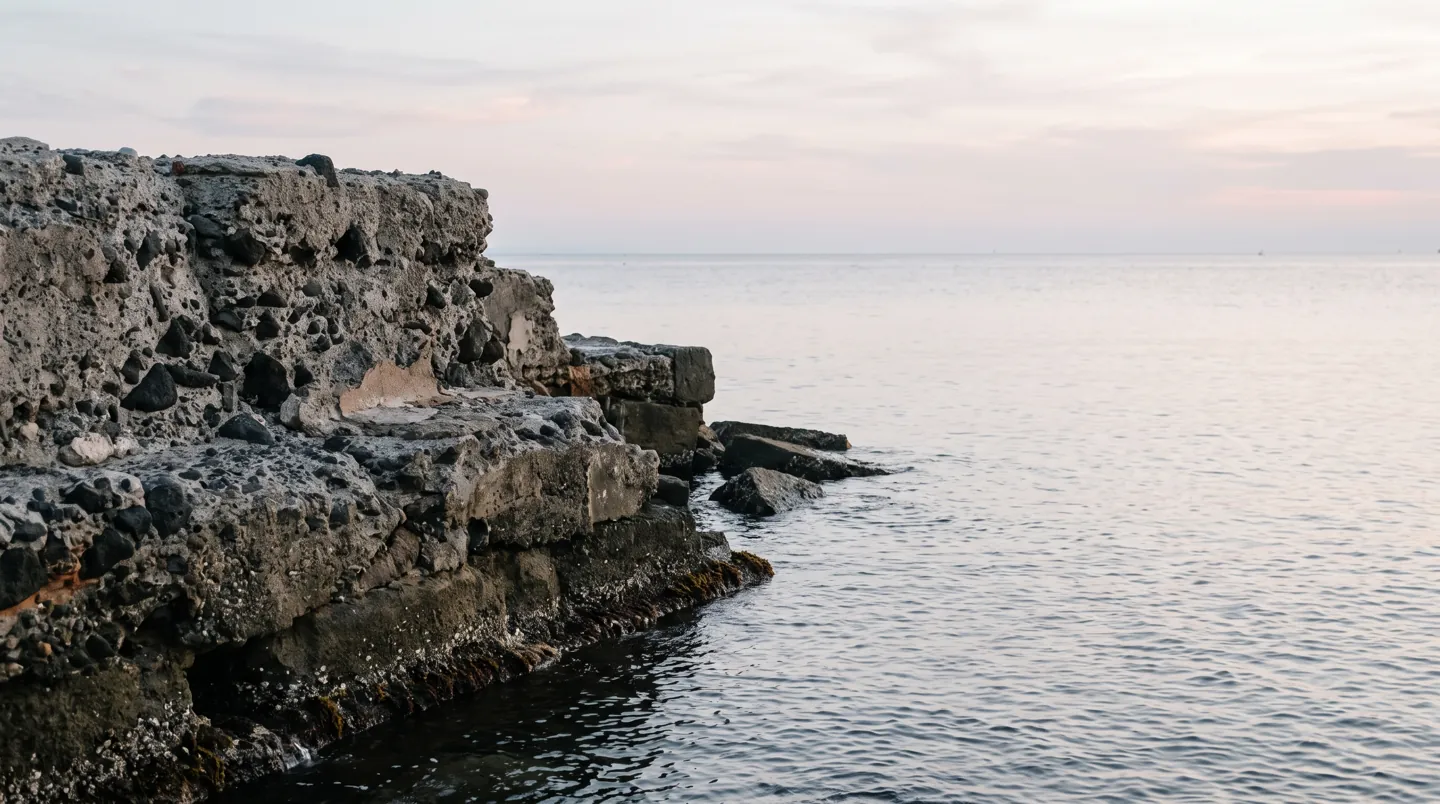
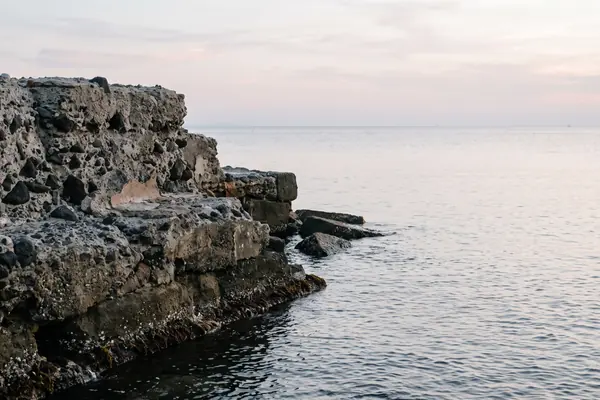
Weathered remains of an ancient Roman concrete harbour pier at the edge of a calm sea, rough grey stone studded with volcanic rock
AI-generated image, not a photograph of a real person or place.

Some Roman concrete has outlasted empires.

Harbour piers, aqueducts and the Pantheon are still standing, while many modern concrete structures have crumbled after a few decades. Researchers now think they know a large part of why.

2,000 YEARSand still standingUpdated

Meet the ingredients

01Principles

  • Volcanic ash that reacts
  • Quicklime that heals cracks
  • Seawater that grows crystals
  • Three ingredients, one durable recipe

02THE SHORT ANSWER

The cracks
fill themselves in.

The secret is not one ingredient.
It is how the Romans mixed them.

QUICKLIME

White lumps with a job

Tiny white lime clasts were long dismissed as sloppy mixing. MIT researchers found they act as a calcium store: when a crack reaches one, water carries the calcium into the gap and it recrystallises to seal it.

Compare the ingredients
POMPEII

A building site frozen in 79 CE

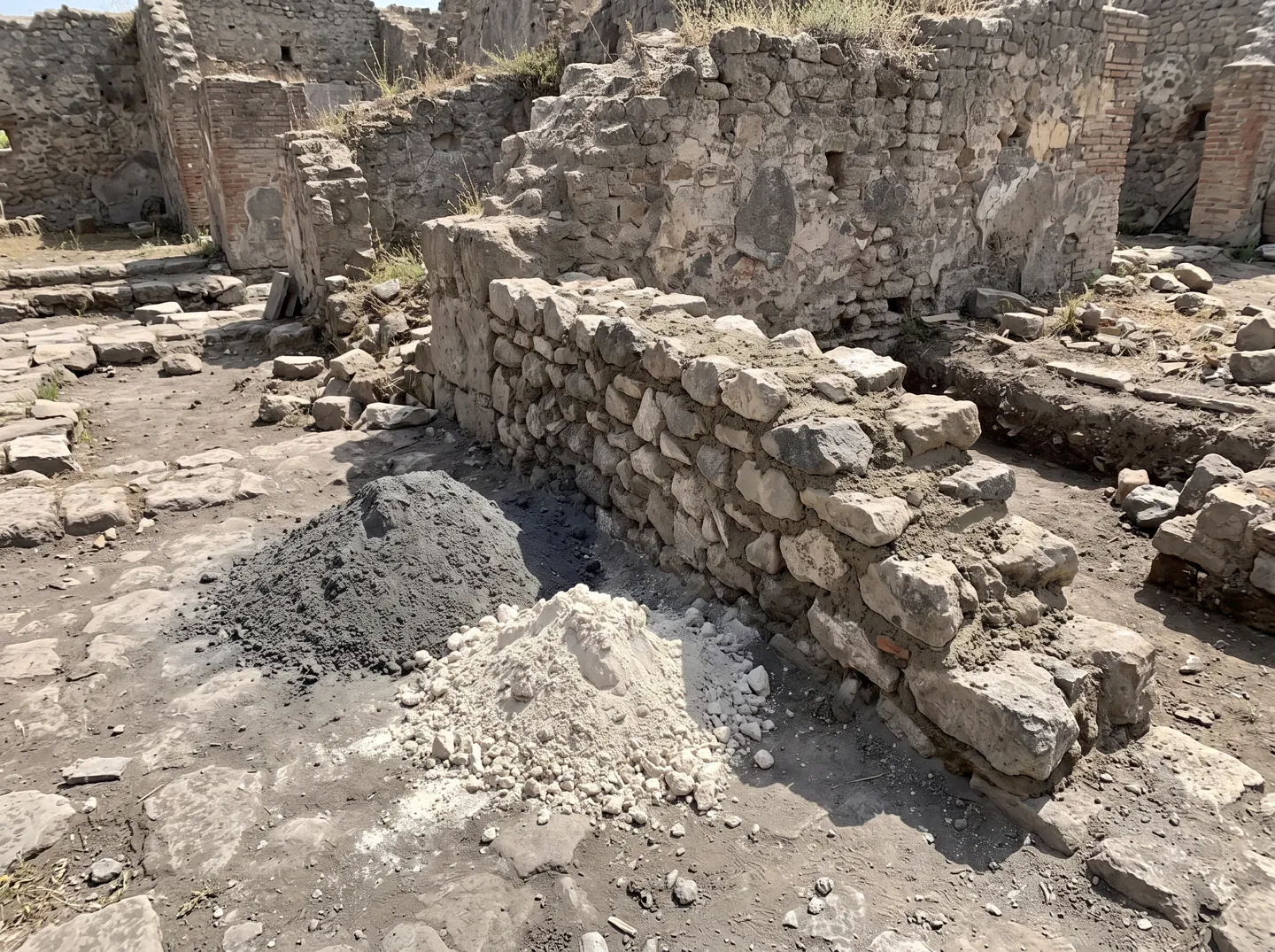
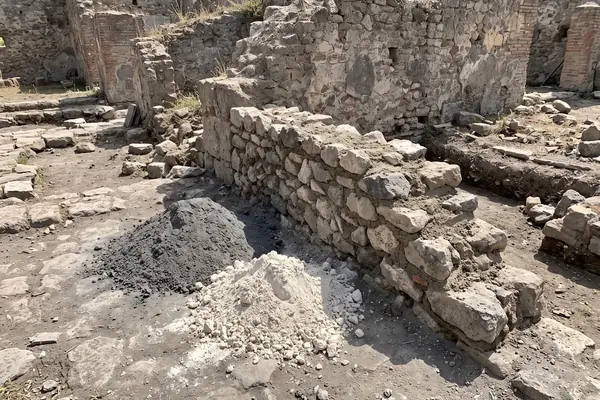
An unfinished site buried by Vesuvius still had its raw material piles. They held quicklime fragments pre-mixed dry with volcanic ash, the first step of hot mixing.

What Vitruvius wrote

SEAWATER

Stronger in the sea

In Roman piers and breakwaters, seawater seeping through the concrete let new interlocking crystals grow, which a University of Utah team says add cohesion over time.

See the numbers

03INSIDE THE MIX

What does each
ingredient do?

Pick an ingredient to see what researchers say it adds. The bar shows how directly the studies link it to the concrete repairing or strengthening itself over time.

Based on research summaries from MIT (2023 and 2025) and the University of Utah (2017).

Ingredient check

Choose an ingredient
Hot-mixed quicklimeBuilt-in repair kit

Mixing quicklime in dry leaves reactive lime clasts. In MIT tests, deliberately cracked hot-mixed samples had healed within two weeks; a sample made without quicklime never healed.

Volcanic ash and pumiceKeeps on reacting

The ash reacts with lime in a pozzolanic reaction. At Pompeii, pumice particles kept reacting with the pore water over time, forming new minerals that further strengthened the concrete.

Seawater (in harbours)Grows new crystals

Seawater filtering through marine concrete dissolved parts of the ash and let minerals such as aluminous tobermorite and phillipsite grow, making it more resistant to brittle fracture.

Chunks of volcanic rockStops cracks spreading

Mineral intergrowths between the rock chunks and the mortar help stop cracks lengthening, according to University of Utah geologist Marie Jackson.

Modern inert gravelMeant to sit still

In modern Portland cement concrete the sand and gravel are meant to be inert. Any reaction can form gels that expand and crack it: the alkali-silica reaction.

Sources: MIT News, 6 January 2023 and 9 December 2025; University of Utah news, 24 February 2017.

04TWO NUMBERS WORTH KNOWING

Small cracks,
big stakes.

One figure from the lab,
one on why it matters today.

2 weeks

Time for test cracks to seal

Researchers cracked hot-mixed samples and ran water through them. Within two weeks the cracks had completely healed and water could no longer flow. A sample made without quicklime kept leaking.

SELF-HEALING · MIT 2023

≈ 8%

Cement's share of global greenhouse gas emissions

MIT News says cement production accounts for about 8 percent of global greenhouse gas emissions, which is why concrete that lasts longer interests engineers today.

CLIMATE · MIT 2023

The University of Utah notes that Roman marine concrete gains strength slowly and has less compressive strength than typical Portland cement, so it is unlikely to replace modern concrete everywhere.

05FOUR THINGS TO LOOK FOR

Read an old wall
like a researcher.

Next time you visit Roman remains, a few details tell you a lot about how the concrete was made.

  1. Spot the white flecks

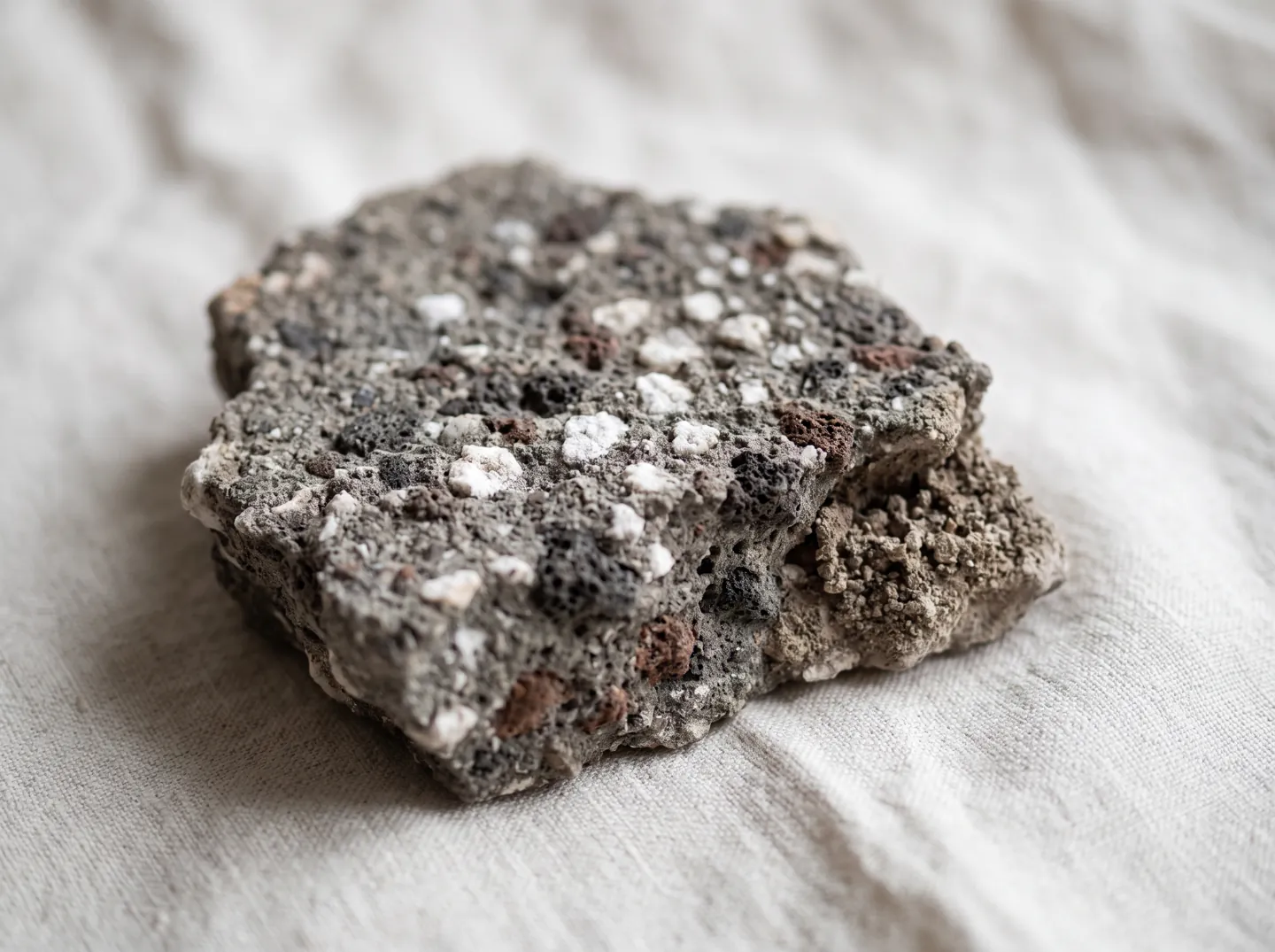
    Small bright white lumps in the grey mortar are lime clasts, the feature MIT linked to self-healing.

  2. Look at the chunks

    Roman concrete set rough lumps of rock into the mortar, more like a conglomerate than smooth modern concrete.

  3. Check for filled cracks

    Researchers found older Roman samples with cracks filled by calcite, the mineral that seals them.

  4. Notice where it stands

    Harbour piers and breakwaters show the seawater effect: Roman marine structures that have endured for around 2,000 years.

Heaps of grey volcanic ash and pale lime beside a half-built rubble stone wall at an excavated ancient building site
AI-generated image, not a photograph of a real person or place.

06VITRUVIUS AND THE RECIPE

The old textbook
got a rethink.

Close-up of a broken piece of ancient concrete showing small bright white lime lumps scattered through grey volcanic mortar
AI-generated image, not a photograph of a real person or place.

Vitruvius, writing in the 1st century BCE, described a powder from around Baiae and Mount Vesuvius that, mixed with lime and rubble, sets hard even in piers built in the sea. He also said lime was mixed with water into a paste before the other ingredients.

The Pompeii site suggests that, at least there, the builders mixed quicklime dry with the ash first and added water later. Lead researcher Admir Masic thinks Vitruvius may have been misread, since he also mentions heat during mixing.

07Questions

Questions people ask

Is Roman concrete stronger than modern concrete?

Not in simple crushing strength. The University of Utah notes Roman marine concrete has less compressive strength than typical Portland cement and takes time to gain strength. Its advantage is durability, especially in seawater.

What are the white lumps in Roman concrete?

They are lime clasts, small pieces of lime that MIT researchers say formed during hot mixing with quicklime. When cracks reach them, they supply calcium that can recrystallise and fill the crack.

What is hot mixing?

Mixing quicklime dry with volcanic ash and other dry ingredients, then adding water. The reaction gives off heat, speeds setting and leaves reactive lime clasts in the finished concrete.

Why did seawater make it stronger?

Seawater percolating through harbour concrete dissolved parts of the volcanic ash. New minerals, including aluminous tobermorite, grew as interlocking plates that reinforce the cementing matrix.

Can we build with Roman concrete today?

Researchers are developing Roman-inspired recipes, but the University of Utah says the right volcanic rocks are not found everywhere and the original marine recipe was lost, so substitutes are needed.

08Sources

ABOUT THIS NAME

Interested in leasing doodleconstructor.com?

doodleconstructor.com is part of the DoodleSale portfolio. It isn't in an auction right now, but you can ask about leasing it.

Ask about this name